




Centrifugal Fan
Centrifugal fans are widely used in grain processing and silo systems to ensure air movement and facilitate the removal of dust and particles in various processes. These fans are preferred due to their ability to provide high pressure and low volumes of airflow.
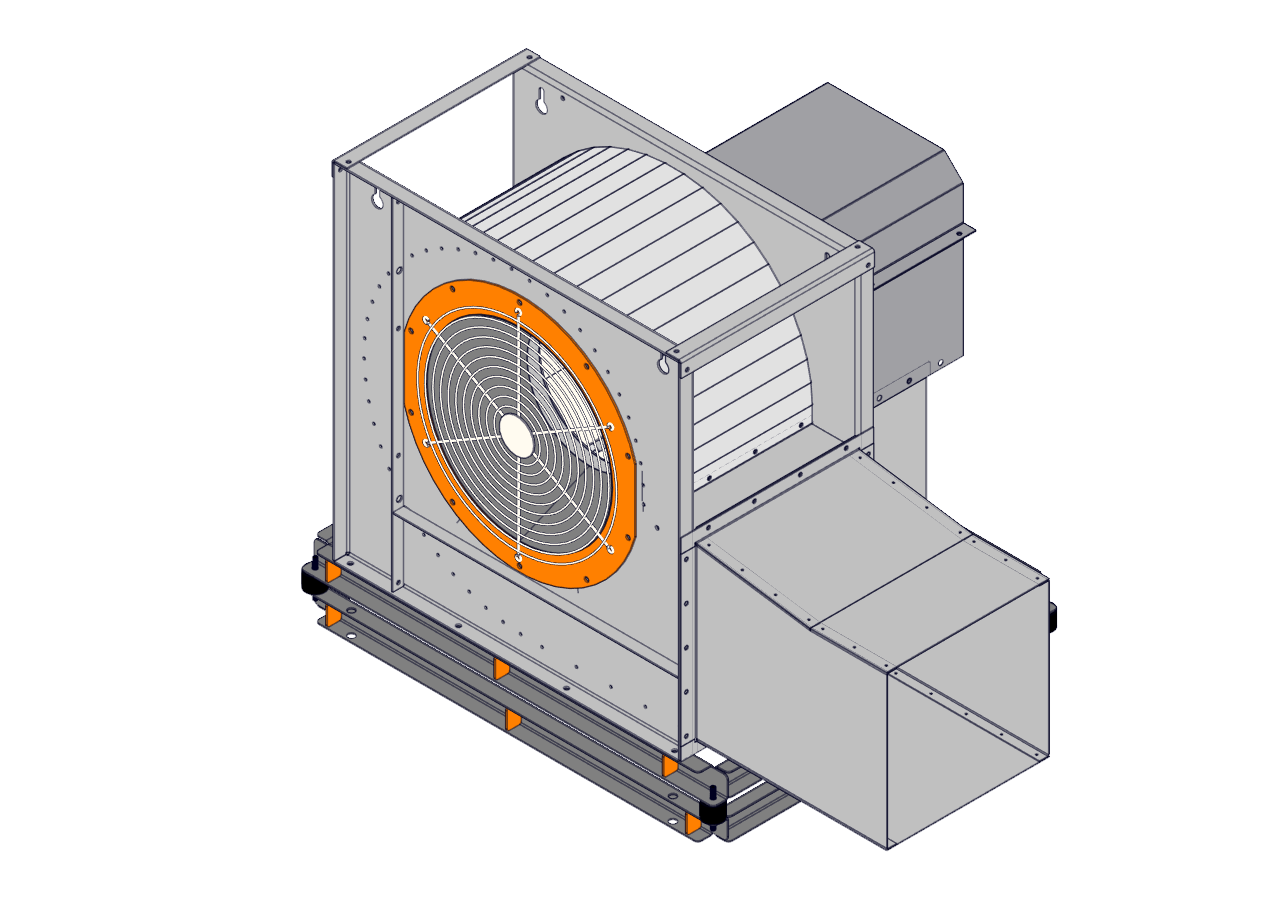
Air Inlet: Air is drawn in through the inlet point at the center of the fan.
Radial Air Flow: As the rotor rotates, air is pushed radially outward from the center.
Air Outlet: The pushed air goes out from the outlet point on the outer wall of the fan.
Durability: These fans withstand harsh operating conditions and heavy loads.
Efficiency: Their energy efficiency is high, which reduces operating costs.
Flexibility: Thanks to being produced in different sizes and capacities, models suitable for various application requirements can be found.
Ventilation Systems: They increase the air quality of the working environment by using them in ventilation and air conditioning systems within the facility.
Product Transport: They are used in pneumatic conveying systems to ensure the movement of grains.
Drying and Cooling Systems: They are used to provide air flow during the drying and cooling processes of grains.
Rotor and Propeller Check: The balance and wear of rotors and propellers should be checked regularly.
Engine Maintenance: Lubrication of fan motors, checking of electrical connections and general engine maintenance should be carried out.
Air Ducts and Filters: Debris and filters in air ducts should be cleaned and replaced regularly.
Vibration and Noise Control: Vibration and noise levels of the fan should be monitored during operation, and necessary precautions should be taken in extreme cases.
Centrifugal fans are critical to maintaining airflow and optimizing dust control in grain processing and silo systems. The correct selection, installation and maintenance of these fans increases the efficiency and reliability of the systems and also contributes to a safe and healthy working environment.
1. Working Mechanism of Centrifugal Fans
Centrifugal fans work thanks to a rotating component called a rotor. The movement of the rotor allows air to be drawn into the center of the fan and then pushed radially outwards.Air Inlet: Air is drawn in through the inlet point at the center of the fan.
Radial Air Flow: As the rotor rotates, air is pushed radially outward from the center.
Air Outlet: The pushed air goes out from the outlet point on the outer wall of the fan.
2. Advantages
High Pressure Capacity: Thanks to their ability to create high pressure, they provide effective air flow in long air ducts and large systems.Durability: These fans withstand harsh operating conditions and heavy loads.
Efficiency: Their energy efficiency is high, which reduces operating costs.
Flexibility: Thanks to being produced in different sizes and capacities, models suitable for various application requirements can be found.
3. Areas of Use
Dust Collection Systems: They are used to collect dust generated during grinding, sifting and transportation processes.Ventilation Systems: They increase the air quality of the working environment by using them in ventilation and air conditioning systems within the facility.
Product Transport: They are used in pneumatic conveying systems to ensure the movement of grains.
Drying and Cooling Systems: They are used to provide air flow during the drying and cooling processes of grains.
4. Maintenance and Operation
In order for centrifugal fans to operate long-lasting and efficiently, regular maintenance and operating procedures should be observed:Rotor and Propeller Check: The balance and wear of rotors and propellers should be checked regularly.
Engine Maintenance: Lubrication of fan motors, checking of electrical connections and general engine maintenance should be carried out.
Air Ducts and Filters: Debris and filters in air ducts should be cleaned and replaced regularly.
Vibration and Noise Control: Vibration and noise levels of the fan should be monitored during operation, and necessary precautions should be taken in extreme cases.
Centrifugal fans are critical to maintaining airflow and optimizing dust control in grain processing and silo systems. The correct selection, installation and maintenance of these fans increases the efficiency and reliability of the systems and also contributes to a safe and healthy working environment.